

Peruvanam Mahadeva Temple
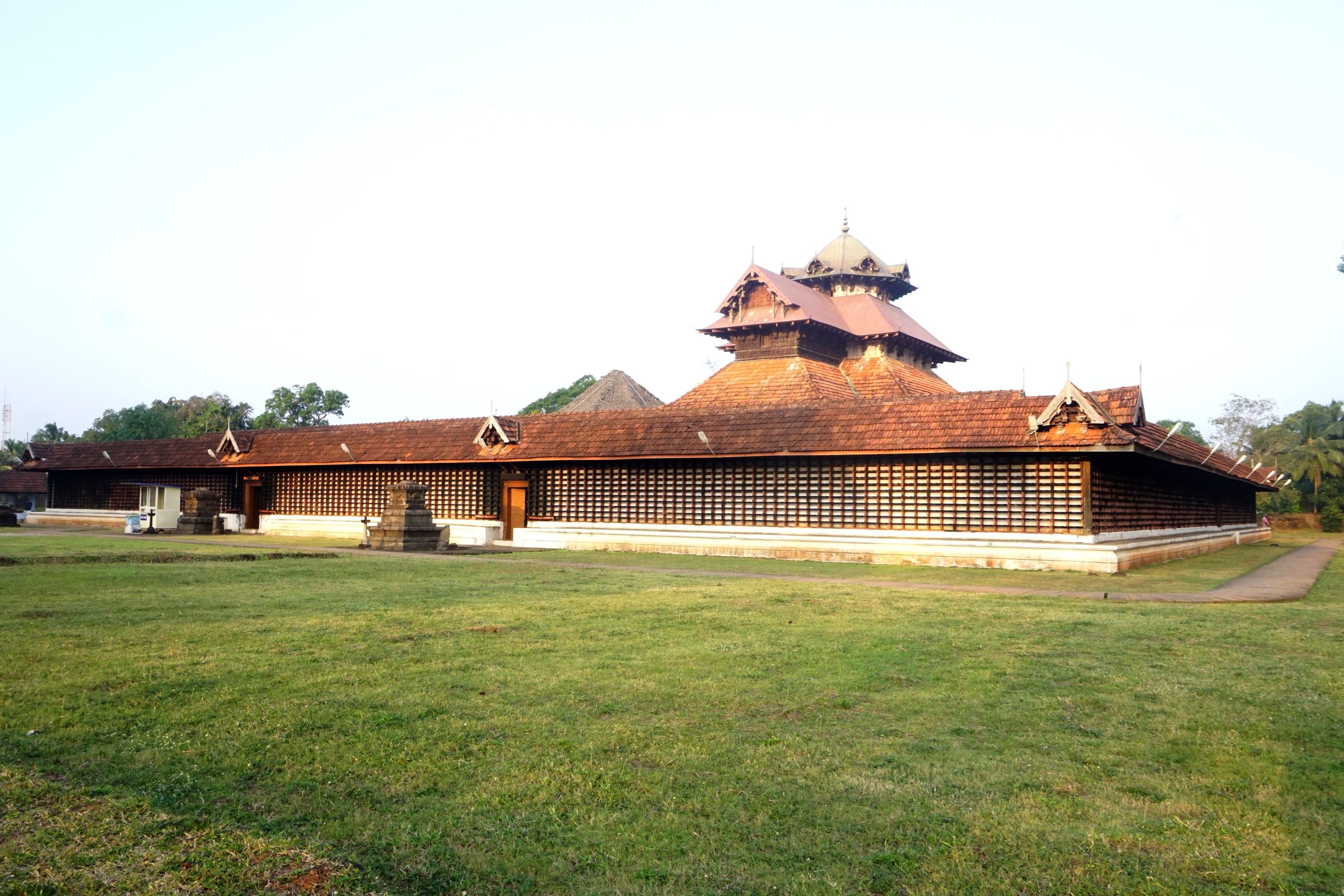
The Great Temple of Peruvanam is centrally located and surrounded by various temples: the Temple of Goddess Durga to the south, the Temples of Lord Subramanya and Goddess Bhadra Kali to the west, the Temple of Lord Shastha to the north, and the Temple of Lord Vishnu to the east. One of the villages built by the fabled sage Parashurama is Peruvanam village. Peruvanam village’s fame stems from the illustrious Peruvanam Mahadeva Temple. This temple, a repository of Vedic knowledge and cultural legacy, is intimately tied to the revered sage Puru Maharishi. Mindful of his father’s old age, the self-sacrificing Puru embarked on a penance and eventually arrived at where the temple now stands. According to legend, the location where Puru carried out his penance became known as Puruvana, and over time, it evolved into Peruvanam. Another interpretation of the story of the name Peruvanam suggests it means the place where Peruman resided. Peruvanam could also be called the location where the “Periya Manasar” resided, referring to individuals who did not differentiate Keralites based on whether they were ‘PanniyurKootukars’ or ‘ShukapuramKootukars.’
The Upasana murti (Diety) of Peruvanam is known as the ‘Irattayappan’, reflecting the dual nature of Lord Shiva that is uniquely manifested in this sacred temple. The temple is steeped in the captivating legend of Parashurama, adding a rich layer of history to its sacred grounds. The Brahmins, who showed their willingness to settle in Kerala, prayed to Lord Shiva to grace their new abode with his divine presence. This is why Lord Shiva, along with Parvati, resides in Peruvanam. Puru Maharshi brought the sacred Shivlingam from near Badrinath and installed it as Madathilappan. One day, a Brahmin and his wife visited a house near the temple. After their meal, the Brahmin went to the temple and rested in the mandapam. The next day, two Shivalingas miraculously appeared in that spot. This divine occurrence symbolised the union of Lord Shiva and Parvati, enriching the temple’s sanctity and allure. There are deities of ‘Irattayappan’, ‘Maadathilappan’, ‘Dakshinamurthy’, ‘Sreeparvati’, ‘Puru Mahirishi’, ‘Ganapati’,’Raktheshwari’, and, Manikandan here.
An ancient sloka that precisely specifies the rituals and offerings guides the worship at this temple in a distinctive and sacred order. This revered verse ensures that every act of devotion is performed with utmost reverence and precision
“Poorvvampuruvanejanaissa
Vinayam
Dwithrashrayassanakaro,
Vandhyaashthagireendrajapuna
Rathayu
Sanyasayogii
Yugmeshaschamahalayopari
Vasan
Madeshvaronantharam
Yogindrashchagajananopuna
Ratha
Yugmeshaschakramal”
The first ‘darshan’ (Seeing the idol or image of the deity) at the temple traditionally follows the sequence of ‘Irattayappan, ‘Sreeparvati’, ‘Dakshinamurthy’, ‘Irattayappan, ‘Maadathilappan’, ‘Puru Mahirishi’, ‘Ganapati’, and then ‘Irattayappan’. However, in contemporary practice, after paying respects to ‘Ganapati’, devotees now salute Manikandan, then Raktassery, and finally bow to ‘Irattayappan’.
At Peruvanam Temple, the day begins with a series of sacred rituals, starting with the Ucha Pooja. Then for the Pantheeradi Pooja, the ritual of ‘Dhara ( the act of pouring or offering during rituals.) is done for the deity ‘Irattayappan’. After that, the Pooja (worship) of Madathilappan, Ucha Pooja Diparadhana (the ritual of worshipping a lamp (deepa), and the day’s rituals conclude with Athazha Pooja (performed in the late evening or night). Each ceremony is performed in this precise order. On special occasions, when ‘TrikalaPooja’ is performed for Sri Bhagwati, an additional, more elaborate worship ritual is conducted.
‘Shatabhishekam Dhara’ for Madathilappan and ‘Shankhabhishekam’ for ‘Irattayappan’ are revered as significant offerings at the temple. Special Poojas, including the ‘Kalabha’, are done on Punartham Day, as it is celebrated as a sacred occasion. The temple’s spiritual calendar is further enriched with Sribhutabali, observed on Thiruvonam in the month of Chingam, Makarasamkrama, PeruvanathPooram, Aratupuzha Pooram, and Shivaratri. Each of these days features unique and elaborate rituals.
Peruvanam Pooram is grandly celebrated on the Pooyam day of the month of Meenam. Historically, 108 deities would gather for the Aratupuzha Pooram, and at the same time, 41 temples participated in the Pooram festival at Peruvanam Temple. Over time, the number of participating temples for the Aratupuzha Pooram dwindled to 42 and then to 23, mirroring the same changes in Peruvanam too. Despite this, Peruvanam Pooram remains a vibrant festival, with 6 ascenders (kayattakkar) and 6 descenders (irakkakkar) actively participating, preserving the rich cultural and spiritual heritage of the celebration.
By the time Aratupuzha Shasta’s Pandi Melam descends Peruvanam Nadavazhi at 7 PM, Chattakkudam Shasta’s Panchari Melam will be in its first phase. The Panchari Melam of UrakathammaTiruvadi begins at 11 PM, adding to the rhythmic and vibrant atmosphere of the festival night. After Pancharimelam, by the time Urakathamma circumambulates the Peruvanam temple, Cherpu Bhagavathy’s procession leaves Mekkavu, accompanied by Pandimelam. Prior to Pandimelam there is Panchavadyam for Cherpu Bhagavathy, that begins at the ‘Kunnambozhathupadi’ and proceeds to the Bhagavathy Temple in Mekkavu. Later, when the Pandi Melam concludes at Peruvanam west Nada, Cherpu’s ‘Uraymakars’ ( responsible for the ceremonial aspects of worship) enquire if there are any descenders, ensuring the continuity and smooth progression of the festival’s rituals. After that Aykunnu Bhagwati joins Cherpu Bhagavathi. Upon reaching the eastern side, after the Kombupattu and Kuzhalpattu, Pancharimelam starts and procession moves to Nadavazhi. Pancharimelam ends at 7:30 AM. Then the Pattini Shankh follows. Then comes the ‘Aarattu’. On the day of Peruvanam Pooram, the ‘Vilakku’ ceremony holds great significance in the temple. During this, 11 deities are lined up on the north side of the Peruvanam temple.
The participating temples then perform Vilakacharam and circumambulate Irattayappan before returning to their respective temples. This ritual adds to the ceremonial grandeur of the event, enriching the overall experience of Pooram.