

EDAKKUNNI SREE DURGA BHAGAVATHY TEMPLE.
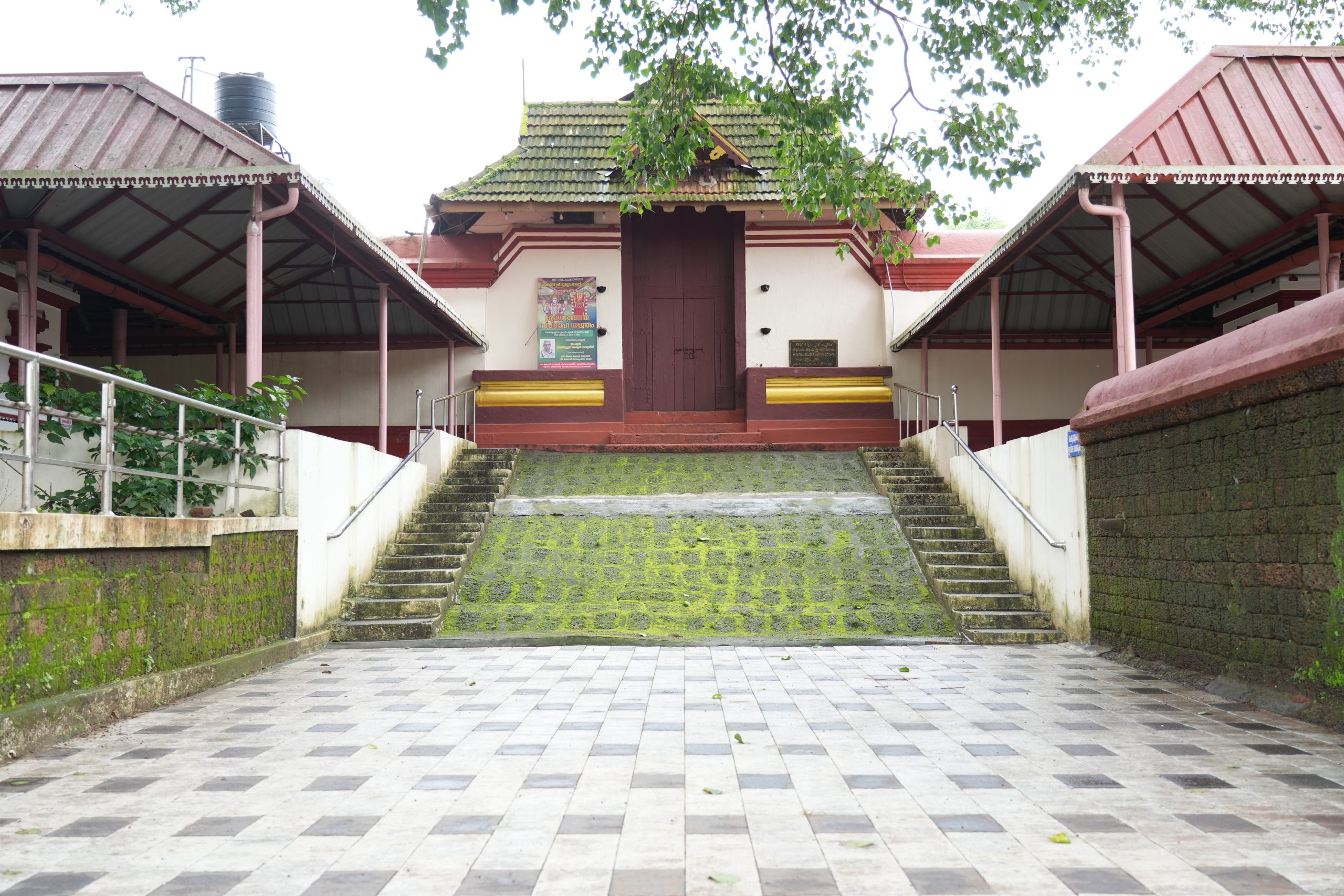
In the ancient village of Peruvanam in Kerala stands the renowned Edakkunni Sri Durga Bhagavathy Temple. This temple is one of the “Durgalayams” established by Lord Parashurama for the liberation of souls, and it holds significant importance among the hundred such temples. The deity at Edakkunni is a majestic form, holding the conch, discus, mace, and lotus, with the Abhaya and Varada mudras, symbolizing protection and blessing.
Located 7 kilometres south of Thrissur, in the heart of Ollur, this grand temple has deep historical roots. The installation of the deity took place on the same day at the three temples—Kuttanellur, Cherpu, and Edakkunni. While travelling from Kuttanellur to Cherpu after the installation, Parashurama found a beautiful spot, surrounded by dense Kunni trees and a vast water body, perfect for installing a deity. Inspired by divine signs, he established the Goddess there. The name “Edakkunni” is believed to have originated either from the dense Kunni trees or from the place where the journey paused (Eda) during the installation, which later evolved into Edakkunni.
Edakkunni Bhagavathy has been a participant in the Peruvanam and Arattupuzha Poorams since time immemorial. The temple shares the same ancient heritage as the Thriprayar and Peruvanam Mahakshetrams, reflecting its enduring significance in the region’s spiritual landscape.
The governance and perpetual administration of the Edakkunni Temple belong to the EdakkunniWarriam. It was Diwan Shankara Warrier who shaped the temple into the magnificent form we see today. He installed the beautiful idol of the Goddess and conducted the Kalasham ceremony in 1022. Later, in 1144, under the leadership of Shri Ikkanda Warrier, known as the Prime Minister of Cochin, the temple underwent significant renovations and another Navikaranakalasham( renovation) was performed. After 34 years, in 1175 (2003), the Edakkunni KaranavasthanamTrust, along with the Temple Welfare Committee, once again carried out renovation work and conducted a Navikaranakalasham on the Punartham star in the month of Kumbham.
The temple’s Uralars include the families of Pallatheri Mana, VadakkiniyedathKirangattumana, and ThekkinidathKirangattumana. The Tantric rituals are overseen by the Thekkedath, Vadakkedath, and Perumpadappu Manas.
The UthramVilakku associated with the Peruvanam-Arattupuzha Pooram is the temple’s main celebration. Other important festivals include the Puthari in Chingam, Navaratri in the months of Kanni and Thulam, the Vavarat in Thulam, daily Sreeveli during the Mandala season, Karthika in Vrischikam, and Punarvasu Prathishta Day in Kumbham.
Due to the prohibition of additional deities within the temple walls, the subsidiary deities, Shiva and Krishna, are installed just outside the temple compound on the eastern side, with Shiva on one side and Krishna on the other.
Pooram Season
The UthramVilakku in the month of Meenam is the most significant celebration at Edakkunni Sri Durga Bhagavathy Temple. The Pooram season, from the flag hoisting on Makiram to the UthramVilakku, is filled with numerous rituals and ceremonies.
On Makiram day, after the morning Abhishekam and Malar Nivedyam, the usual temple rituals are suspended. In the evening, the villagers gather to hoist the flag, followed by a conch call and the Deeparadhana. Around 7 PM, with the consent of the Uralars, the Valiya Pani is sounded, and Bhagavathy is ceremoniously taken out in a grand procession. After the Panchari Melam, the conch is blown, and the procession crosses the eastern gopuram to the temple pond, where the Arattu is performed. Upon returning, the Navakam Puja and Sreebhoothabali take place. Except on the day of Arattupuzha Pooram, this routine of Arattu, Navakam Puja, and Sreebhoothabali is followed every day of the Pooram season. For Arattupuzha Pooram, Bhagavathy’s Arattu is performed in the river there. After that, there are no further Arattu rituals during the Pooram season, with only one regular puja being conducted each day. As the deities travel to various Poorams, offerings (Para) are received, and the deities are ceremonially brought down for puja at the various Manas.
Bhagavathy participates in almost all the Poorams associated with Peruvanam and Arattupuzha. The journey begins with a visit to Nankulam, where Bhagavathy and Shasta complete a circumambulation to the accompaniment of the melam, before proceeding together to Thaikkattussery Pooram. After the Padikkal Pooram and offerings, they return. In the evening, Bhagavathy takes part in the Koottiyezhunnallippu at Chakkumkulangara for the PunarthamVilakku, and after receiving the offerings, proceeds to Chittichathakkudam for the Pooram and related rituals.
On the day of Peruvanam Pooram, Bhagavathy joins the 11 deities led by Nettissery Shasta inside the Peruvanam Erattayappan Temple for the grand Vilakku ritual before concluding the Pooram with the final melam. Bhagavathy also participates in the elephant race at Pidikapparambu Temple, where she has often secured first place. On Makam day, however, Bhagavathy does not travel anywhere, as it is believed that she is in a state of divine rest.
On the morning of Arattupuzha Pooram, the temple doors open early for Abhishekam, Malar Nivedyam, and Niramala. Following these rituals, the Valiya Pani sounds, signalling the beginning of the procession. After a brief melam, the procession proceeds quietly, without the usual sounds of bells, chains, or instruments, to reach first at Arattupuzha. Here, the deity is ceremoniously brought down to the sandy riverbank for rituals, including the offering of Ganapathi Idal. Afterwards, devi is led back to the Arattupuzha Sastha temple.
At 11 PM, the grand Pooram unfolds at Arattupuzha Paddam with five elephants and the lively Panchari Melam. In the presence of Chathakkudam Shasta, the overseeing deity of the Pooram, Arattupuzha Shasta, who is the host, Edakunni Bhagavathy is honoured with the PattiniShankhu ceremony. After the Arattu, Edakkunni Bhagavathy returns to her temple. Uniquely, Bhagavathy is the only deity allowed to depart without staying for any further rituals after her own Pooram.
The following day, the famous UthramVilakku takes place. In the morning, Nettissery Shasta is welcomed with Kodikkal Para. This is followed by the Navakam Puja and Sreebhoothabali. In the evening, the temple is illuminated with 108 garlands and a Chuttuvilakku, followed by the Deeparadhana. Since no other rituals are allowed within the temple walls before the Utram Vilakku procession, the Panchavadyam begins at Ollur Center. The Bhagavathy’s deity is not carried in this procession, but Valkannadi and Thirudada, is used instead. At 11 PM, after Valiya Pani, Bhagavathy is brought out for the UthramVilakku. The procession is a grand affair, joined by Nankulam Shasta, Thaikkattussery Bhagavathy, Chakkamkulam Shasta, and Chitti Chathakkudam Shasta. After Vilakkacharam, Keli, Kombu patt, and Kuzhal patt, the famous Panchari Melam takes place, followed by the circumambulation of the temple. Other deities
Bhagavathy’s Padikkal Pooram takes place once a year, passing through the western gopuram. After this, the deities are deposed from the elephatns and brought inside the temple.
On the day of Atham, after the guest deities have completed their Padikkal Pooram, all five deities are placed in Valyambalam for the Punhyaham ceremony. The Pani signals the beginning of the final procession. The deities are honoured three times (Upacharam) and then bid farewell through the western gopuram. After receiving the Kodikkal Para, the deity is ceremoniously brought down and led to the Sreekovil (Sanctum Sanctorum). The flagpole is then lowered by the elephant, marking the conclusion of the nine-day Pooram festival.