



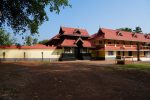
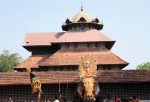
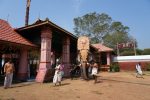
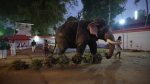
AARATTUPUZHA SREE SHASTHA TEMPLE
The Arattupuzha Sree Sastha Temple is located about 15 kilometres south of Thrissur on the Thrissur-Kodungallur road, 2 kilometres east of the Thevar Road Stop. Nestled on the banks of the river that eventually becomes the Karuvannur River, this temple has a calm, village-like environment. With a history spanning over 3,000 years, this historic temple hosts the renowned and time-honoured Deva Mela.
Deity
The deity of Arattupuzha Temple is the tranquil and serene Lord Sastha, embodying the essence of all deities. He is depicted as seated in Sukhasana, with his left leg folded and his right knee bent, resting atop his left foot. The revered sage Acharya Vasishta Maharishi, known as Sri Rama’s guru, is believed to be the presiding deity of the temple. This temple is unique, being one of the rare few in Kerala that has no other subsidiary deities. The temple radiates extraordinary spiritual energy, making it a place of deep and profound sanctity.
Offerings
The god treasures the offerings of Thiroottu, Ada, coconut breaking (Nalikeramudakkal), and Karikkabhishekam—all of which are sacred acts of devotion.
Temple Administration
The administration of the temple is traditionally held by the MadampuElamannu, Chorunchetathu, Karoli Elamannu, ChittisseriKaplingattu, and Ottumekkattu manas, who serve as the uraynamas (administrators). During the tenure of ElamanaKrishnamenon as the Cochin Devaswom Commissioner, the temple was accorded special status within the Devaswom. This esteemed position remains unchanged to this day.
Annual Festivals
The temple’s annual calendar is rich with significant celebrations, including the grand Pooram festival in the month of Meenam, the Prathishta Day in Midhunam, the Maha Ganapathi Homam in Karkidakam, the Navaratri celebrations in Kanni, the Desavilakku in Vrischikam, and the Pathamudaya festivities in Dhanu. Additionally, the first day of every Malayalam month, the muppettu Shani (first Saturday), and Uthram Day are observed as important occasions. Among all these, the Pooram festival holds the highest prominence, serving as the centre piece of the temple’s annual events.
Deva Sangamam
Arattupuzha was once the sacred gathering place for the 108 deities of Peruvanam village. When the festival at Peruvanam was discontinued due to technical reasons, the tradition evolved into the present-day Peruvanam-Arattupuzha Pooram. Today, 23 deities participate in this grand Deva Mela. According to legend, Thriprayar Thevar, the presiding deity of Arattupuzha Pooram, comes to meet his revered Guru at this festival. It is also believed that, in addition to the 33 crore deities, celestial beings like Yakshas, Kinnaras, and Gandharvas also descend to witness and participate in the Arattupuzha Pooram, adding to its divine grandeur.
Kodiyettam
Following the Shuddhi Kalasham on Rohini day, the Kodiyettam ceremony begins at 6:30 PM on Makayiram day. The villagers ceremoniously bring in a freshly cut, trimmed, and polished Arecanut tree (Kavungu), which is used as the flagpole. The pole is adorned with alternating layers of banyan and mango leaves. Once the flag and bell are securely attached to the top, the flagpole is raised, with the flag facing north. This is followed by the tantric rituals performed by the temple’s uralars, marking the formal start of the festival.
One of the elephants silently proceeds to Ezhukandam, without any musical accompaniment. Upon reaching the spot, a conch is blown nine times, followed by the Tripada (traditionally it was ‘nadathappandi’). The procession then returns to the temple, where the melam reaches its crescendo at the temple’s entrance hall. Near the great Bali stone, in the presence of the Madampi lamp, Nirapara, and Vellarika, two coconuts are ceremoniously broken. Then, Adiyanthiram Marar turns eastward, bowing and paying respects to Shasta, and asks three times, “Have the temple uralars arrived at the Mukhamandapam? And have the Namboothiri community elders arrived at the Vatil Madam?” This ritual marks a significant moment in the proceedings.
Next, turning westward, the procession bows and pays respects, signaling the start of Arattupuzha Shasta’s Pooram Purappadu with the traditional call of “KoottokkottuKottatte!” The ritual is then repeated once more, with the conch blown three times before the Pooram ceremoniously commences with the percussion performance using ‘Valam Thala’ (aa type of chenda).
Outside the temple walls, near the banyan tree, the sacred ritual of ‘ThiruvayudhaSamarpanam’ (offering of the sacred weapon) takes place. This offering includes a bow, arrow, sword, and shield—each crafted with great care. The bow, as tall as a ‘dhandu’ (a measuring stick), is made from Karimpana cane, with a string fashioned from the dried and twisted bark of the Chela tree. The arrows are also made from Karimpana cane, while the sword and shield are crafted from a special wood.
The Thiruvayudham is adorned with gold and decorated with motifs drawn using Manola. It always accompanies Shasta during the procession, symbolizing divine protection. Meanwhile, within the temple, tantric rituals such as Navakam and Sreebhootabali begin. Until the final flag-lowering, daily rituals include Sreebhootabali, Keli, Kombupat, Kuzhalpattu, and Sandhyavela, happen in the temple.
ThiruvathiraVilakku
At 3 a.m., in a deeply devotional atmosphere, the ThiruvathiraPurappadu begins. With the temple tantri’s permission, the Thimila beats start inside the temple, signaling the commencement of the ritual. Shasta’s Thidambu is then carried for a single circumambulation, followed by a grand exit accompanied by the Chempada. The deity’s image is placed on the elephant, which makes a ceremonial round before heading north. Once the Chempada concludes at this location, an elaborate Vilakkacharam ceremony follows.
Next, accompanied by the Shruti with the Valanthala, the procession completes one and a half circumambulations. Facing south at the eastern entrance, the ritual ends with the traditional Koorukottal. This is followed by an Keli, Kuzhalpattu, and Kombupattu in detail, with the grand Panchari Melam, accompanied by five majestic elephants, continuing until 7 AM. The melam reaches its climax at the western Nadappura, after which the ritual concludes with an Edakka pradhakshinam..
Journey to Thaikkattussery
Around 8 AM, with the sound of the conch blown three times, with the Panchari Melam in third phase, Arattupuzha Shasta begins the procession outside the temple walls. The melam concludes near the banyan tree, and accompanied by the Nadaswaram, conch, and the Shruti from Valanthala, the journey to Thaikkattussery begins. In the days leading up to the Arattupuzha Pooram, the Shasta is always accompanied by notes of the Nadaswaram.
The deity is ceremoniously brought down and paraded once it reaches the temple mandapam at Thaikkattussery. The Edavazhi Pooram of Arattupuzha Shasta begins after the Thaikkattussery Pooram, with the first Pooram offered to the first deity visited. After completing the traditional honors and circling Thaikkattussery Temple, the procession proceeds to Chathakkudam Sree Shasta Temple, where Iralliezhunnellippu is done. The Sasthavu returns to Arattupuzha after the traditional offerings are made.
Journey to the Tantri Illam
After completing the daily pujas and tantric rituals, the procession departs at 8 PM, heading towards the Tantri’s illam at PeruvanamKunnathurPadinjattedath Mana. Here, the deity is ceremoniously brought down, and rituals including puja, Adanivedyam, and Pani kottu are performed. Following this, the procession continues to Nurukkulangara. After a ceremonial circumambulation, the procession returns to Arattupuzha, marking the end of the day’s sacred journey.
Peruvanam Pooram
Peruvanam Pooram is celebrated on the day of Pooyam, once known as the grand day of the ancient festival at the Peruvanam Mahadeva Temple. After the daily pujas, at around 4 PM, the Valiya Pani is performed, The conch is blown three times, followed by the ceremonial Kottivekkal at Valam Thala, signaling the start of the journey to Peruvanam.
Accompanied by the majestic Nadaswaram, the grand procession moves forward, with conch calls at key locations such as Kaithavalappu, Pallisseri Center, and Thevar Road Junction. The Arpuvili begins as the procession reaches the Urakam old pathway. Upon reaching the Urakam Nada, the Arpuvili concludes, and the Melam begins, filling the air with rhythm and energy. The Melam culminates at the northeast corner of the Urakam Temple, after which the procession, once again accompanied by the Nadaswaram, continues its journey.
By 6:30 PM, the grand Irakkapandi Melam begins inside the southern entrance of the Peruvanam Temple, with seven majestic elephants standing tall in line, creating a magnificent spectacle. The melam continues until 9:30 PM, facing east at Peruvanam Nadavazhi. After the Shasta’s melam concludes, the ‘Tripada’ (percussion) leads the procession to the Peepal tree near arattu kulam on the east side.
Following the Chathakkudam Pooram, Arattupuzha, Kalleli, and Medamkulam deities proceed westward through Peruvanam Nadavazhi after Kombupattu and Kuzhalpattu, The procession accompanied by panchari melam. The procession ends exactly where the Pooram started inside the temple compound.
After that, Arattupuzha Shasta goes to the Tantri’s Illam, and the other gods circle the Peruvanam Temple. The gods set out on their return journey the next day, having been granted the customary honors at Peruvanam. The tantric rituals resume at Arattupuzha Temple around 11:30 AM after the procession makes a stop at Urakam Temple for a puja and offerings.
Tharakkal Pooram
On the day of Tharakkal Pooram, the festivities begin at 7 AM with the ceremonial march of Arattupuzha Shasta to Pidikapparambu. Shasta pauses here, facing north, close to the Poorapadam, while Chathakkudam Shasta stands in reverence, facing west.
After Cherpu and Urakam offer their respects and depart, the Kombupat and Kuzhalpat signal the start of the Tripada ritual. The procession circles Pidikapparambu Temple before returning to pay respects to Chathakkudam Shasta. The journey continues across the river, with Arattupuzha Shasta accepting offerings at Keezhekke Madam, Vadakke Madam, Thekke Madam, and Padinjare Madam. Each stop features traditional ceremonies, including ‘Chaalu keeral’ and ‘Chaadi kottu.’ Upon returning to the temple, tantric rituals commence.
At 4 PM, Shasta sets out to receive offerings (para) from Chorinchetdathu Mana, Karolil Elamana Mana, and Chullimadam. After returning to the temple, the evening rituals begin with the conch blowing, followed by Keli, Sandhyavela, and Athazhapooja. The Tharakkal Pooram is then followed by a grand procession led by Chempada and, finally, Panchari Melam, which is accompanied by seven majestic elephants. After the Kuttapara ritual and fireworks, the deities take their positions—Shasta and Thottippal Bhagavathy facing west, and UrakathammaThiruvadi facing east.
Rice is placed on a spread of Paya and Mundu, with the deities surrounded by Thirumenis. The PattiniShankhu is blown three times by the representatives of Urakam, Thottippal, and Arattupuzha temples.
Thottippal Bhagavathy offers respect to Shasta and UrakathammaThiruvadi before proceeding to Shasta Kadvu for the Arattu ritual. After circumambulating Arattupuzha temple, Thottippal Bhagavathy departs, while UrakathammaThiruvadi heads to Keezhottukara Mana, and Arattupuzha Shasta proceeds to Madampu Mana. At midnight, procession to Pisharikkal Temple, Irakkiezhunnellippu and receiving final honors before concluding the day’s grand events.
Thottippal Pooram
On the day of Arattupuzha Pooram, the ritual begins with the ‘panikottal’ as Shasta departs from Pisharikkal Temple, heading towards Thottippal Temple.
After the Thottippal Pooram, Shasta joins Chathakkulam Shasta for the Edavazhi Pooram. The deities are brought down for puja at the temple, with the Bhagavathis honored with the Brahmaniyamma song. Shasta returns to Arattupuzha with Chathakkudam Shasta after the offerings are made. Upon arrival, Irakkiezhunnellippu of Chathakkudam Shasta, before leaving Chathakkulam Shasta is honored within the temple walls. This marks the conclusion of the day’s sacred rituals and celebrations.
Arattupuzha Pooram
After participating in Thottippal Pooram, Arattupuzha Shasta returns to Arattupuzha temple. Following the Athazhapooja, Keli, and the grand Valiya Pani, Shasta is once again paraded with the rhythm of Chempada. The deity circumambulates the temple in a solemn Eka Talam procession, followed by the grand Panchari Melam accompanied by 15 elephants. After the melam concludes, fireworks light up the sky.
The procession continues and leads to Ezhukandam, where the rituals of Kuzhalpat, Kombupat, and three conch blows take place. With the Nattappandi, the procession returns, and the host deity, Arattupuzha Shasta, takes his position at Nilapaduthara.
Following this, the grand processions of the other deities begin. These Poorams are magnificently celebrated across the vast fields to the west of Arattupuzha Temple, along the pathway between the temple and Nilapaduthara, with the processions descending and ascending from the west.
Thriprayar Thevar arrives at Kaithavalappu around midday (approximately 1 PM). After the Chathakkudam Shasta’s Pooram, Arattupuzha Shasta entrusts the responsibility of overseeing the processions to Chathakkudam Shasta, under the watchful presence of Edakkunni Bhagavathy, before returning to the temple from Nilapaduthara. Thriprayar Thevar is honored first with a grand Panchavadyam accompanied by 11 elephants, followed by a Pandi Melam with 21 elephants.
KoottyEzhunnallippu
The grand and famous KootiyEzhunnallippu then takes center stage. With over 71 elephants, the procession begins, featuring Cherpu Bhagavathy to the right of Thriprayar Thevar and UrakathammaThiruvadi to the left, accompanied by Chathakkulam Shasta. The scene is set for a divine convergence, with Thriprayar Thevar at the center, flanked by the Bhagavathis on either side.
This majestic Deva Sangamam is a sight to behold, embodying the concept of Maha Vishnu reclining as Anantha, with Sri Bhagavathy and Bhoomidevi by his side. Tens of thousands of devotees go around in a procession, offering prayers in a moment of spiritual fulfilment and divine grace. The Pandi Melam continues on both sides until sunrise, creating an atmosphere of profound reverence and celebration.
Arattu
It is believed that when the Chothi star reaches its zenith, the divine presence of Ganga Devi graces Mandaram Kadavu at Arattupuzha. As Thriprayar Thevar arrives at Kaithavalappu, the Arattu of the deities begins. The first to bathe in the sacred waters is KadalasseryPisharikkal Bhagavathy, the goddess known for her power to neutralize poison. Urakam, Thriprayar, and Anthikad temples hold the exclusive right to construct a mandapam at Mandaram Kadavu. Following the KootiyEzhunnallippu, Thriprayar Thevar, Cherpu Bhagavathy, and UrakathammaThiruvadi proceed to Mandaram Kadavu for the Arattu. The deities are ceremoniously brought down and led to the specially prepared mandapam, where UrakathammaThiruvadi circumambulates Thevar—a symbolic act of profound reverence. This sacred Arattu draws countless devotees, who find spiritual fulfillment in participating in the ritual. After the Arattu, UrakathammaThiruvadi and Thevar return to Arattupuzha Temple, with the PattiniShankhu echoing along the way. Urakam is the first to circle the temple, marking the conclusion of this deeply auspicious event.
As Thriprayar Thevar departs for the Arattu, Arattupuzha Shasta, the host of this grand Deva Mela, is ceremoniously brought out. The following ritual involves offering respects to the deities who are circumambulating the temple before their departure. Arattupuzha Shasta then accompanies Cherpu Bhagavathy, UrakathammaThiruvadi, and Thriprayar Thevar up to Ezhukandam, ensuring their journey is marked with reverence and grandeur. Finally, the temple astrologer announces the date for the next year’s Pooram, bringing the sacred event to a close.
Gramabali
Gramabali is a ritual performed to protect and bless the village. In the evening, after the Sreebhootha Bali is completed, the temple guardian announces the start of the Gramabali by sounding the Valiya Pani. Shasta is then ceremoniously placed on the Avanappalaka at the Vatil Madathil. The ritual includes lighting the MadampiVilakku, offering Para, and breaking coconuts as part of the sacred proceedings. With the Tantri’s permission, the Gramabali procession begins around 9 PM. The Tantri leads the ritual, offering Bali at various significant locations, including Villunni Thara, the jalashayam, the temple, crossroads, main pathways, sacred trees, and the four boundaries of the village. The procession then moves from the river, crossing the vast fields and stopping at temples and sacred spots, including Kottankulangara, Maimpilly, Urakam, Kadayikkulangara, Aynikkad, Muthulliyal, Cherp, Thaikkulangara, Meekavu, Peruvanam, Thiruvullakkavu, Vallachira, Chathakkudam, Pidikapparambu, Pisharikkal, Thottippal, and Mulangu. Along the route, devotees prepare elaborate Kolams (sacred drawings) and adorn the path with lamps, Vellarikka (cucumber), coconuts, and garlands, welcoming Arattupuzha Shasta with deep reverence and devotion. As the procession passes, the villagers experience a profound sense of spiritual fulfillment, marking the ritual’s significance in the protection and well-being of the community.
Kodikkuthu
After the Gramabali ritual is completed, the procession returns to Arattupuzha Temple, where the temple guardian-Kshetrapalakan- is offerd the final Bali, marking the conclusion of the Gramabali ceremony. Once Shasta is ceremoniously led back to the Sreekovil, the flagpole is gently lowered, signaling the end of all the Pooram festivities. With this, Arattupuzha Pooram comes to an end.