

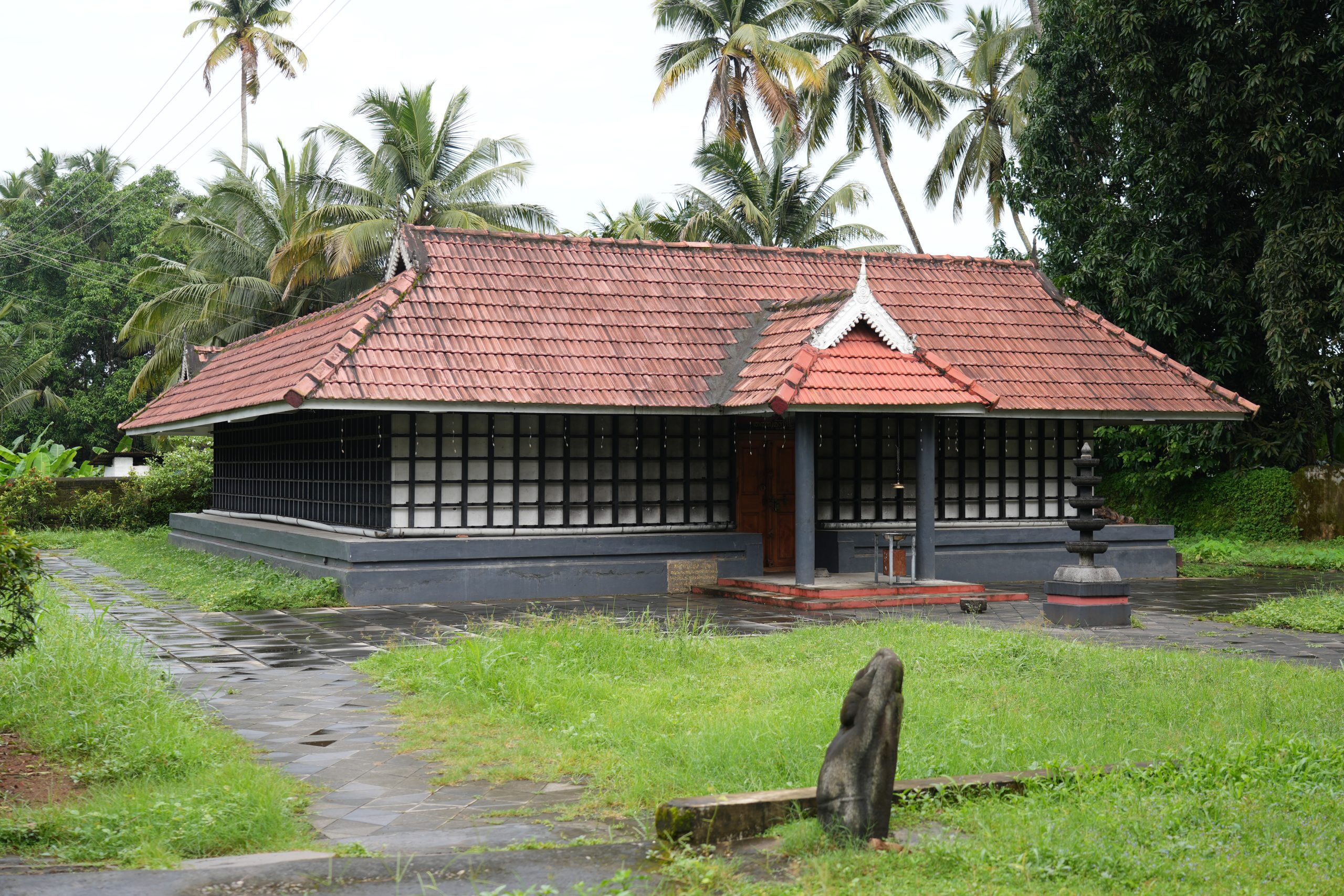
NANKULAM SASTHA TEMPLE
The Karippookkavu Group Devaswom manages three temples: a Bhagavathy Temple, a Narasimha Swami Temple, and a Sastha Temple. Each of these temples has its own distinct characteristics. The Bhagavathy is known for her simplicity and disdain for extravagance. In fact, the deity dislikes the scent of elephants. Once, when an elephant was tied near the temple despite warnings, it turned into stone when it was untied and taken away in the morning. This led to the area being named Aana Kallu (Elephant Stone). Until recently, there was a stone that resembled an elephant. The Karthika star in the month of Vrischika is celebrated as the Prathishta Day.
Narasimha Moorthy at Nankulam Temple required Jala Darshanam to calm his ferocity. When a pond was being planned for this purpose, a serpent is said to have shown the location for the temple pond. Then it was known as Nagakulam. Over time, this pond came to be known as Nankulam. The Sastha Temple has gained prominence because of its involvement in the Aarattupuzha Pooram festival.
The main annual festival at the Nankulam Sastha Temple is the Pooram, which begins on the Makiram star day in the Meenam month and lasts for eight days. Even the pit dug for the temple’s flagpole has significance, as it must be dug until water is seen. On the Makiram day, if the Chothi star rises by noon, the grand Pani (drumming ceremony) and flag-hoisting take place, followed by Sreebhoothabali, Navakam, and the lighting ritual. Irraki Pooja and the ritual Para (grain offering) are conducted at the Vengalloor Mana, Kizhakkedath Mana, and Parakkad Mana. At dawn, after the ThiruvathiraVilakku ritual, Edakkunni Bhagavathy and Sastha head to Thaikkattusseri for the Pooram. After the Thaikkattusseri Pooram concludes, the Sastha returns to Nankulam, performing rituals at various manas (residences), including Mullanazhi, Pozhichur, Pattattu, and Vellambalathu Mana, before returning to the temple by midnight.
On the Peruvanam Pooram day, after performing Parayeduppu (grain offering) and Irrakipooja at the Kallur Mana, the Sastha returns to temple. After Valiya paani at 4 pm, heads to Peruvanam, where the Sastha participates in the Vilakku ceremony alongside Nettisseri Sastha and other 10 devi-devas. After Oorakathamma completes the pradhakshinam, Nankulam Sastha climbs on Nilapaduthara for upacharam with Irattayappan. Then descends the Peruvanam Nadavazhi, and the deity returns to Nankulam. The next evening, after performing poojas at Parakkad and Moorkannoor Mana, the Sastha heads to the Pidikkaparambu Pooram. After offering poojas at Cherussery Temple and participating in Aanayottam (elephant race) at Pidikkaparambu, the deity pays tribute to Chathakkudam Sastha before departing. On the way back, visits various manas like Vadakkedath, Thekkedath, Perinchery Math, and Kakkanad, before the Sastha returns to the temple by noon. The following evening, after a Valiyapaani ceremony, the deity departs for Aarattupuzha. In earlier times, the Nettissery and Nankulam Sasthas participated in the Aarattupuzha Pooram, but this practice no longer continues. Upon arrival at Aarattupuzha, the Sastha rests, and after the Aarattu ceremony, pays respects to Aarattupuzha Sastha and departs for the temple. That evening, Sastha participates in the Edakkunni UthramVilakku festival, performing poojas at Moorkannoor, Thekkinneyedam, Vadakkinneyedam, and Pallathery, before accompanying Edakkunni Bhagavathy in a grand procession. After the Punyaaham purification ritual, the Sastha returns to Nankulam with Thaikkattusseri Bhagavathy.
The festival concludes with the ‘Nalikerameru’(breaking the coconut by throwing it onto a stone) ritual, an offering, which is believed to have a growing participation. As Thaikkattussery Bhagavathy is present during this time, offering the Para is considered particularly auspicious. After Upacharam, once Thaikkattussery Bhagavathy departs, Irakkiezhunnellippu is done. At dusk, after Deeparadhana, perform Keli, Kuzhal Patt, Kombu pattu, followed by Ezhunnellippu with Pancharimelam. Then eleven circumambulations around the temple before the flag is lowered, marking the conclusion of the festival.